Starting an online business sounds simple until you actually try to do it.
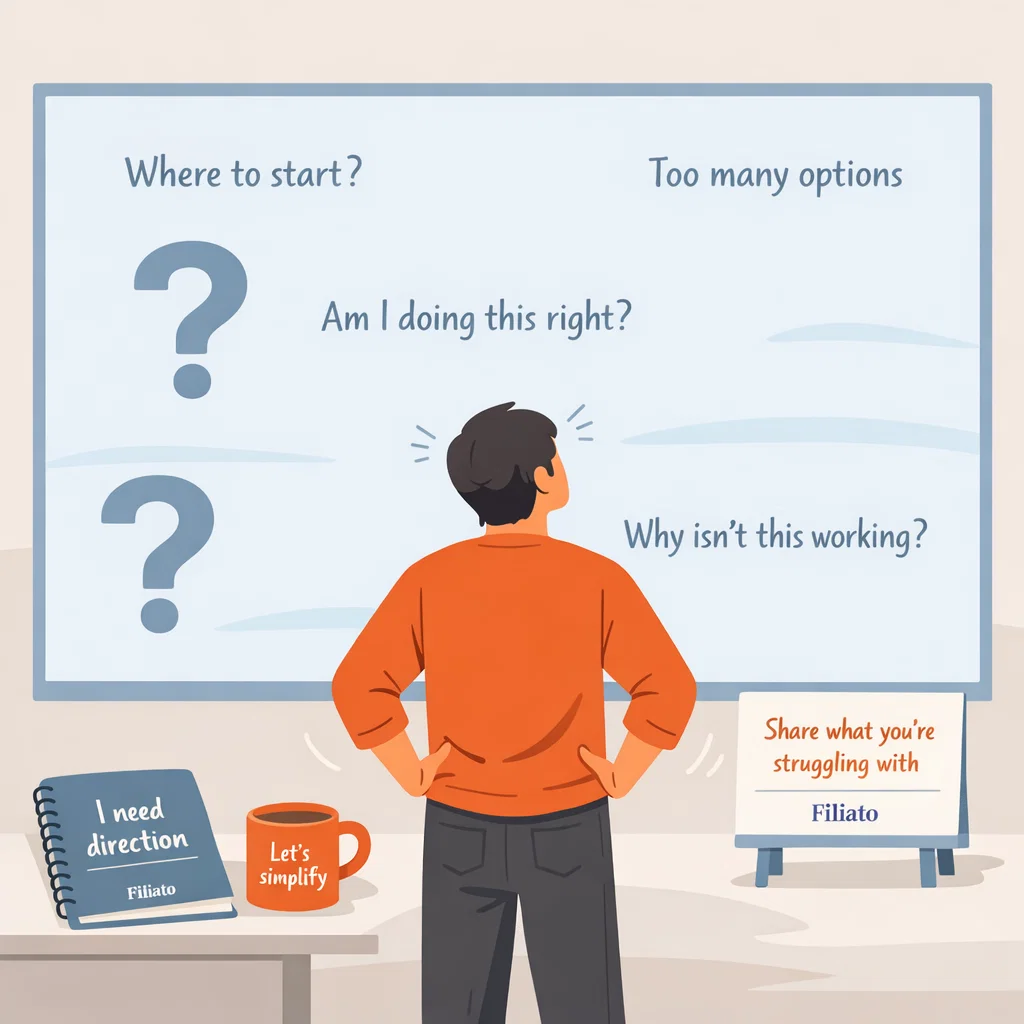
You open your laptop with motivation, search for ideas, and within an hour you’re overwhelmed. Courses, platforms, tools, business models, creators, advice. Dropshipping, SaaS, digital products, communities, freelancing, AI tools, no-code, ads, content.
Too many options. Too many opinions. Too much noise.
If you feel stuck before you even start, you’re not lazy or incapable. You’re experiencing the most common problem beginners face: decision overload.
This article breaks down why starting feels so confusing, what most people do wrong, and the smartest way to start an online business without burning time, money, or motivation.
Why Starting an Online Business Feels So Hard
The problem is not lack of opportunity. It’s the opposite.
Today, you can:
- Build websites without code
- Sell digital products instantly
- Reach global audiences from your phone
- Launch businesses with almost no upfront cost
But with low barriers comes high confusion.
Most beginners don’t fail because they pick a bad idea. They fail because they try to pick the perfect idea before they understand the basics.
The internet pushes you to optimize before you even understand the game.
The Three Biggest Struggles Beginners Face
Too Many Business Models
You’re told you can:
- Start a SaaS
- Sell courses
- Build a community
- Run ads
- Do affiliate marketing
- Freelance
- Build AI tools
- Launch ecommerce
Each one sounds promising. Each one has success stories. Each one also hides complexity.
The mistake is trying to choose the best model instead of the simplest starting point.
Confusing Tools With Progress
Many people feel productive while:
- Comparing platforms
- Watching tutorials
- Buying tools
- Setting up systems
But none of that creates momentum.
Choosing Shopify, Framer, Whop, Skool, or Thinkific will not move your business forward if you don’t know what problem you’re solving.
Tools amplify clarity. They don’t create it.
Fear of Choosing Wrong
Beginners often freeze because they’re afraid of:
- Wasting time
- Looking stupid
- Picking the wrong niche
- Failing publicly
So they keep researching instead of acting.
Ironically, this guarantees the outcome they’re trying to avoid: no progress.
The Smartest Way to Start (That Almost Nobody Talks About)
The smartest way to start an online business is not by choosing a platform or business model.
It’s by answering one simple question:
What small problem can I help with right now?
Not forever. Not at scale. Right now.
This removes pressure and creates motion.
What You SHOULD Do First
Start With Problems, Not Ideas
Instead of asking:
“What business should I start?”
Ask:
“What do people around me struggle with?”
Examples:
- People don’t know how to choose tools
- Beginners are overwhelmed by options
- Creators don’t know how to package knowledge
- Freelancers don’t know how to price their work
Businesses grow from problems, not brainstorming sessions.
Pick One Direction, Not the Perfect One
You don’t need the best path. You need a path.
Pick something that:
- You understand at least slightly
- Doesn’t require huge upfront investment
- Can be tested quickly
Example:
- Writing one guide instead of building a full course
- Helping one audience instead of “everyone”
- Selling one simple product instead of a platform
Momentum beats optimization.
Build Something Small and Real
The fastest way to learn is to ship something imperfect.
Examples:
- A simple PDF instead of a course
- A landing page instead of a full website
- A free resource instead of a paid offer
- One post per day instead of a full content system
Small projects teach you more than months of theory.
What You Should NOT Do Early On
Don’t Stack Complexity
Avoid combining:
- New business model
- New platform
- New audience
- New skills
- New monetization
At the same time.
That’s not ambition. That’s overload.
Don’t Start With Ads or Automation
Ads and automation only work when:
- The offer is clear
- The audience is defined
- The message is proven
Running ads without clarity is just paying to be confused faster.
Don’t Copy Someone Else’s Business Blindly
What worked for someone with:
- An audience
- Experience
- Capital
- Connections
Will not work the same way for a beginner.
Use examples for inspiration, not instructions.
A Simple Starting Framework
If everything feels overwhelming, use this sequence:
- Understand one problem
- Create one simple solution
- Put it in front of real people
- Listen to feedback
- Adjust
That’s it.
No fancy funnels. No advanced tools. No complex systems.
Realistic Example
Instead of:
“I want to build a SaaS”
Start with:
“I’ll write a short guide explaining how beginners choose the right tools”
Instead of:
“I want to build a community”
Start with:
“I’ll help five people solve one specific problem and see what they ask next”
Businesses grow from conversations, not blueprints.
Progress Feels Boring at First
Early progress doesn’t look impressive.
It looks like:
- Writing alone
- Learning from mistakes
- Getting ignored
- Feeling unsure
That’s normal.
Every successful online business started in a phase that felt unclear and unimpressive.
If you’re feeling stuck or overwhelmed, you don’t need another opinion. You need structure.
I’ve put together a set of free guides and survey that help beginners cut through the noise, choose a direction, and start building without overcomplicating things.
You can download them for free and take the first step with clarity instead of confusion.